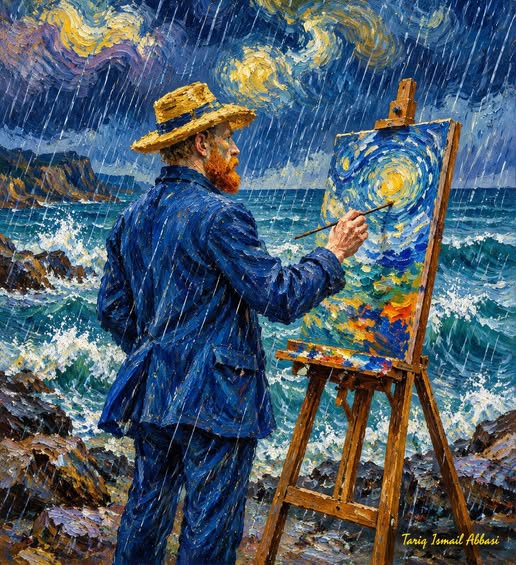
Vincent van Gogh Suicide: The Tragic Death of the Legendary Dutch Painter at 37
lastchapterstories.name.ng| Verified
Vincent van Gogh, one of the most influential artists in the history of Western painting, died on July 29, 1890, at the age of 37, following a gunshot wound sustained two days earlier in Auvers-sur-Oise, France.
The Dutch painter’s death remains one of the most discussed episodes in art history. Best known for masterpieces such as The Starry Night, Sunflowers and The Bedroom, Van Gogh produced an extraordinary body of work despite experiencing significant personal and psychological difficulties throughout his life.
His death has traditionally been understood as suicide. However, an alternative theory suggesting that another person may have fired the fatal shot has also attracted attention among historians and writers.
What Happened to Vincent van Gogh?
On July 27, 1890, Van Gogh reportedly suffered a gunshot wound to his abdomen while in Auvers-sur-Oise, a village north of Paris.
According to the established historical account, he had gone out into the countryside and shot himself with a revolver.
Despite his serious injury, he managed to return to the Auberge Ravoux, the inn where he was staying. The wound was examined by doctors, but the bullet could not be removed.
His younger brother, Theo van Gogh, was informed and travelled to be with him.
Vincent died during the early hours of July 29, 1890, approximately two days after the shooting. Theo remained beside his brother during his final hours.
Vincent van Gogh Cause of Death: Was It Suicide?
The widely accepted historical explanation is that Vincent van Gogh died by suicide after shooting himself in the abdomen.
His death followed years of emotional difficulties, periods of psychological distress and repeated health struggles.
The Van Gogh Museum’s historical account supports the suicide explanation, noting that the artist’s letters from July 1890 reflected increasing loneliness, uncertainty about the future and concerns about becoming a burden to his brother.
Nevertheless, the precise circumstances surrounding the shooting have been debated.
In 2011, authors Steven Naifeh and Gregory White Smith published an alternative theory suggesting that Van Gogh might have been accidentally shot by local teenagers, including René Secrétan.
The theory proposed that Van Gogh may have protected the person responsible by accepting responsibility for the shooting.
However, this interpretation remains disputed. Van Gogh specialists have challenged the alternative account, and the traditional suicide explanation continues to be the position adopted by the Van Gogh Museum.
His Final Days in Auvers-sur-Oise
Van Gogh arrived in Auvers-sur-Oise in May 1890 after leaving the Saint-Paul-de-Mausole asylum in Saint-Rémy-de-Provence.
He hoped the change of environment would help him regain stability while allowing him to remain closer to his brother Theo, who lived and worked in Paris.
During his final weeks, Van Gogh continued painting with remarkable intensity. The countryside, village streets, gardens and surrounding landscapes provided subjects for numerous works.
Despite his impressive artistic productivity, his personal letters indicated that he remained concerned about his future, his health and his financial dependence on Theo.
His final period was therefore marked by both extraordinary creativity and considerable personal uncertainty.
Vincent van Gogh and His Brother Theo
Theo van Gogh played an important role throughout Vincent’s life.
He provided financial assistance, emotional support and encouragement during periods when Vincent struggled to establish himself as an artist.
The brothers maintained an extensive correspondence, exchanging letters that documented Vincent’s artistic ambitions, personal difficulties and changing outlook on life.
When Vincent suffered the fatal gunshot wound, Theo travelled to Auvers-sur-Oise and remained with him until his death.
The loss deeply affected Theo, whose own health deteriorated after his brother’s passing. He died in January 1891, only a few months later.
The brothers were eventually buried beside each other in the cemetery at Auvers-sur-Oise.
Vincent van Gogh’s Artistic Legacy
Although Van Gogh experienced limited commercial success during his lifetime, his paintings eventually became among the most celebrated works in modern art.
His distinctive use of colour, expressive brushwork and emotional approach to landscapes and portraits helped influence the development of modern painting.
Some of his most recognised works include:
-
The Starry Night (1889)
-
Sunflowers (1888)
-
The Bedroom (1888)
-
Irises (1889)
-
Wheatfield with Crows (1890)
-
Portrait of Dr. Gachet (1890)
His artistic reputation grew considerably after his death, helped by the efforts of Theo’s widow, Johanna van Gogh-Bonger, who worked to preserve and promote his paintings and correspondence.
Today, Van Gogh is remembered as a major figure in Post-Impressionism and one of the most recognisable artists in the world.
Vincent van Gogh – Personal Details
| Detail | Information |
|---|---|
| Full name | Vincent Willem van Gogh |
| Date of birth | March 30, 1853 |
| Place of birth | Zundert, Netherlands |
| Nationality | Dutch |
| Profession | Painter and artist |
| Art movement | Post-Impressionism |
| Brother | Theo van Gogh |
| Date of injury | July 27, 1890 |
| Date of death | July 29, 1890 |
| Age at death | 37 |
| Place of death | Auvers-sur-Oise, France |
| Reported cause of death | Complications following a gunshot wound |
| Historical explanation | Suicide, according to the widely accepted account |
| Alternative theory | Disputed accidental shooting theory |
| Burial place | Municipal Cemetery, Auvers-sur-Oise, France |
| Famous works | The Starry Night, Sunflowers, Irises |
Remembering Vincent van Gogh
More than a century after his death, Vincent van Gogh remains an extraordinary figure in the history of art.
His paintings continue to attract millions of admirers, while his letters offer insight into the personal struggles and artistic ambitions that shaped his life.
Although his death at 37 was tragic, his influence has endured across generations. His work continues to inspire artists, historians and audiences around the world.
Van Gogh’s story is remembered not only for the circumstances of his death but also for the remarkable creativity he brought to the world during his lifetime.
Disclaimer: This article presents the widely accepted historical account of Vincent van Gogh’s death. Although suicide is the explanation supported by the Van Gogh Museum and many art historians, alternative theories have been proposed. The precise circumstances of the shooting have been debated, and the alternative theories have not been conclusively established.
For more updates, please check our social media platform
Thank you for reading.