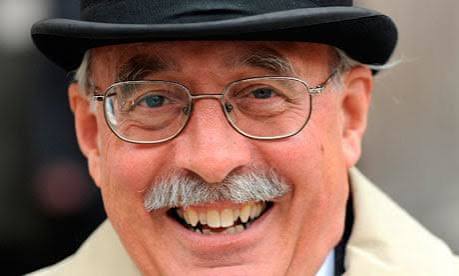
Professor Richard Holmes Obituary: British Military Historian Dies at 65 in Hampshire, England
lastchapterstories.name.ng| Verified
Professor Richard Holmes, the distinguished British military historian, author, broadcaster and former Army brigadier, died on April 30, 2011, aged 65. His death in Hampshire, England, followed a battle with cancer.
Holmes was widely respected for his ability to bring military history to life through books, academic research and television documentaries. He became particularly familiar to British audiences through the BBC’s War Walks, in which he explored historic battlefields and explained the experiences of soldiers who fought there.
His career combined academic scholarship with decades of service in the Territorial Army. He rose to the rank of brigadier while building a reputation as one of Britain’s leading military historians.
His passing prompted tributes from colleagues, military figures, historians and television audiences who admired his knowledge, storytelling and commitment to understanding the experiences of ordinary soldiers.
What Happened to Professor Richard Holmes?
Richard Holmes died on April 30, 2011, following an illness associated with cancer. He was 65.
News of his death was reported on May 1, 2011, with colleagues describing him as an exceptional historian and communicator.
Contemporary reports identified myeloma, a form of bone marrow cancer, among the health problems associated with his final illness. The Guardian reported that he ultimately died from pneumonia.
His death marked the loss of a historian whose work had reached audiences well beyond universities and military institutions.
Who Was Professor Richard Holmes?
Edward Richard Holmes was a British military historian, academic, author, television presenter and senior Territorial Army officer.
Born on March 29, 1946, in Aldridge, Staffordshire, England, he developed an interest in military history during his education. He became particularly interested in understanding the experiences of soldiers rather than focusing exclusively on generals, military leaders and major political decisions.
That perspective became a defining feature of his books and television programmes. Holmes believed that the lives and experiences of ordinary servicemen deserved a central place in the telling of military history.
His ability to combine detailed research with accessible explanations helped establish him as a respected figure in British historical broadcasting.
The Guardian+2
Richard Holmes’ Education and Academic Career
Holmes attended Forest School in north-east London before receiving a scholarship to study history at Emmanuel College, Cambridge.
He continued his education at Northern Illinois University and the University of Reading, where he completed his doctorate in 1975.
In 1969, he joined the Royal Military Academy Sandhurst as a lecturer in the Department of War Studies. He later became deputy head of the department, a position he held between 1984 and 1986.
In 1989, Holmes moved to Cranfield University, where he became involved in the Security Studies Institute at Shrivenham. He was appointed Professor of Military and Security Studies in 1995 and remained associated with the institution until his retirement in 2009.
His academic work examined military history, battlefield experiences, military strategy and the development of armed forces.
Richard Holmes’ Military Service and Rise to Brigadier
Alongside his academic career, Holmes served in the British Territorial Army for approximately 36 years.
He joined the Territorial Army in 1964 and received his commission in 1967. His military responsibilities increased over the following decades, eventually leading to senior command positions.
Between 1986 and 1988, he commanded the 2nd Battalion of the Wessex Regiment (Volunteers). He later became Brigadier of the Territorial Army, making him Britain’s highest-ranking reserve officer at the time.
He also served as Director General of Reserve Forces and Cadets and held the appointment of aide-de-camp to Queen Elizabeth II between 1991 and 1997.
His military service earned him several honours, including appointment as a Commander of the Order of the British Empire (CBE) in 1998.
BBC War Walks and Television Career
Although Holmes was an accomplished academic and military officer, many television viewers knew him through his documentary work.
His BBC series War Walks, broadcast during the 1990s, took viewers to historic battlefields, including locations associated with the First and Second World Wars.
Rather than relying heavily on dramatic reconstructions, Holmes used the actual landscapes to explain how battles unfolded and what soldiers experienced.
His other television projects included:
-
Rebels and Redcoats (2003), exploring the American War of Independence.
-
Wellington: The Iron Duke, examining the life and military career of the Duke of Wellington.
-
In the Footsteps of Churchill (2005), following important locations in Winston Churchill’s life.
-
A documentary profile of Oliver Cromwell for the BBC’s Great Britons series.
His calm presentation style, detailed knowledge and ability to communicate complex historical events made him a familiar and respected broadcaster.
Richard Holmes’ Books and Publications
Holmes wrote more than 20 books during his career, covering military campaigns, battlefield experiences, historical personalities and the lives of soldiers.
Among his best-known publications were:
Tommy: The British Soldier on the Western Front (2004)
This book examined the experiences of British soldiers during the First World War, drawing attention to their everyday lives and the conditions they faced.
Redcoat: The British Soldier in the Age of Horse and Musket (2001)
The publication explored the history and experiences of British soldiers during the period of muskets, cavalry and major imperial campaigns.
Sahib: The British Soldier in India, 1750–1914 (2005)
This work examined the experiences of British soldiers serving in India over more than a century.
Wellington: The Iron Duke (2002)
Holmes explored the life and military achievements of the Duke of Wellington, one of Britain’s most prominent military commanders.
Marlborough: Britain’s Greatest General (2008)
The book examined the career and military legacy of John Churchill, Duke of Marlborough.
His writing was particularly recognised for placing soldiers’ experiences at the centre of historical accounts rather than treating them as background figures in the stories of famous commanders.
Tributes Following Richard Holmes’ Death
Following news of his death, colleagues and friends paid tribute to his contribution to military history, broadcasting and the British Army.
Major General Sir Evelyn Webb-Carter described Holmes as a remarkable historian with extraordinary recall, an engaging sense of humour and an exceptional ability to communicate historical knowledge.
Colleagues also remembered his generosity, personality and commitment to the Army Benevolent Fund.
His former assistant, Steph Muir, praised his knowledge and described him as someone whose ability to connect with people made a lasting impression.
The tributes reflected the different communities Holmes served throughout his life, from academic researchers and military personnel to television audiences and battlefield history enthusiasts.
Richard Holmes’ Wife and Family
Richard Holmes married Katharine Elizabeth Saxton, known as Liz, in 1975. The couple had two daughters, Jessica and Corinna.
His family life remained relatively private compared with his public career as a historian and broadcaster.
Following his death, tributes described him as a devoted family man. He was survived by his wife and their two daughters.
Professor Richard Holmes Personal Details
| Detail | Information |
|---|---|
| Full name | Edward Richard Holmes |
| Known as | Professor Richard Holmes |
| Date of birth | March 29, 1946 |
| Date of death | April 30, 2011 |
| Age at death | 65 |
| Birthplace | Aldridge, Staffordshire, England |
| Place of death | Hampshire, England |
| Nationality | British |
| Profession | Military historian, author, academic and broadcaster |
| Military rank | Brigadier |
| University | Cranfield University |
| Former institution | Royal Military Academy Sandhurst |
| Best-known television series | War Walks |
| Notable book | Tommy: The British Soldier on the Western Front |
| Wife | Katharine Elizabeth Saxton (Liz) |
| Children | Two daughters, Jessica and Corinna |
| Cause of death | Cancer-related illness; contemporary reporting also identified pneumonia |
| Honours | CBE, OBE and other military distinctions |
Remembering Professor Richard Holmes
Professor Richard Holmes left a lasting contribution to British military history through his academic work, military service, books and television documentaries.
His approach to history helped audiences understand the realities of warfare from the perspective of the people who experienced it. Through War Walks and his many publications, he made complicated historical events accessible without losing the importance of research and detail.
His unusual combination of academic achievement and military experience gave his work a distinctive authority. He was not simply a historian writing about military life; he had also served in the armed forces and understood many of the institutions and traditions he studied.
Although he died in 2011, his books and documentaries continue to provide valuable perspectives on Britain’s military past.
Disclaimer: This obituary is based on publicly reported biographical information and contemporary accounts of Richard Holmes’ death. Medical details are presented according to those reports. The family remains the appropriate source for further personal or memorial information.
For more updates, please check our social media platform
Thank you for reading.