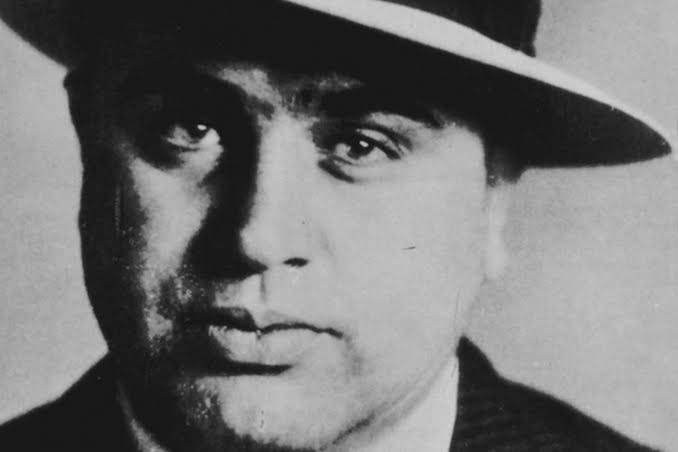
Al Capone Obituary: Notorious American Gangster Dies at 48 in Miami Beach, Florida
lastchapterstories.name.ng| Verified
Al Capone, one of the most infamous figures in American criminal history, died on January 25, 1947, at his residence on Palm Island in Miami Beach, Florida. He was 48 years old.
Born Alphonse Gabriel Capone on January 17, 1899, in Brooklyn, New York, Capone became internationally recognised as a powerful organised-crime leader during the Prohibition era. His rise to prominence in Chicago, involvement in illegal alcohol operations and eventual imprisonment made him one of the most widely discussed gangsters of the twentieth century.
Although his criminal influence eventually disappeared, his name remained closely associated with the violence, corruption and illegal enterprises that shaped America’s organised-crime history during the 1920s and 1930s.
His death in Miami Beach marked the end of a turbulent life that had taken him from the working-class neighbourhoods of Brooklyn to the centre of one of America’s most notorious criminal empires.
Early Life and Background
Alphonse Gabriel Capone was born on January 17, 1899, in Brooklyn, New York, to Italian immigrant parents, Gabriele and Teresa Capone.
He grew up in a large family in a working-class neighbourhood where economic difficulties and the pressures of urban life shaped much of his early experience.
Capone attended school but left at a young age. During his teenage years, he became associated with street gangs and individuals involved in organised criminal activity.
His early connections eventually introduced him to more established figures in the underworld, setting the stage for his move into organised crime.
Rise to Power in Chicago
Capone’s criminal career expanded significantly after he moved to Chicago, where he became associated with Johnny Torrio, an influential organised-crime figure.
During the Prohibition era, the nationwide ban on the manufacture and sale of alcoholic beverages created a lucrative illegal market. Criminal organisations exploited the demand, building networks around bootlegging, gambling and other illicit businesses.
Capone gradually rose through the ranks and eventually became the leading figure in the Chicago Outfit.
His organisation accumulated substantial wealth and influence through illegal operations. At the height of his power, Capone became a familiar figure in newspaper coverage and public discussions about crime in America.
His influence was also accompanied by intimidation, corruption and violent competition between criminal groups.
The St. Valentine’s Day Massacre
One of the most notorious events associated with the period of Capone’s influence was the St. Valentine’s Day Massacre on February 14, 1929.
Seven men connected to the North Side Gang were murdered in a garage in Chicago. The killings became one of the most infamous episodes in the history of American organised crime.
Capone was widely suspected of having a connection to the violence, which was linked to the rivalry between criminal organisations competing for control of illegal markets.
However, he was never convicted of ordering the massacre. The incident nevertheless became closely associated with his public reputation and the violent atmosphere surrounding Chicago’s underworld.
Arrest and Imprisonment for Tax Evasion
Despite his wealth and influence, Capone eventually became the focus of an extensive federal investigation.
Authorities pursued him for several offences, but the case that ultimately led to his imprisonment centred on federal income tax violations.
In October 1931, he was convicted of tax evasion and sentenced to 11 years in federal prison. He also received financial penalties and was ordered to pay outstanding taxes.
His imprisonment significantly weakened his influence over the Chicago Outfit.
Capone was eventually transferred to Alcatraz Federal Penitentiary, where prison restrictions and his deteriorating health made life increasingly difficult.
Declining Health and Release From Prison
During his imprisonment, Capone’s physical and mental health deteriorated.
He had contracted syphilis earlier in life, and the disease eventually caused serious neurological complications. His condition became increasingly severe during his years in custody.
In November 1939, Capone was released from federal custody after serving approximately seven years and six months of his sentence.
His declining health made it difficult for him to return to the criminal world he had once controlled. Instead, he spent much of his remaining life away from public attention.
Al Capone’s Final Years in Miami Beach
After his release, Capone settled at his Palm Island residence in Miami Beach, Florida.
His health continued to decline, and he experienced complications associated with neurosyphilis, including significant neurological impairment.
The man who had once commanded a powerful criminal organisation was now largely withdrawn from public life.
His final years were spent with close family members, away from the criminal activities and public attention that had defined much of his earlier life.
Al Capone’s Death on January 25, 1947
Al Capone died on January 25, 1947, at his Palm Island home in Miami Beach. He was 48 years old.
His death followed a prolonged period of declining health after years of complications associated with syphilis.
He had suffered a stroke in the days before his death and subsequently developed pneumonia. His condition worsened, and he died at his Florida residence.
His passing brought an end to the life of one of the most recognisable figures in the history of American organised crime.
A Complicated and Lasting Historical Legacy
Al Capone remains a major subject of historical research, documentaries, films and books about organised crime in the United States.
His rise during Prohibition demonstrated how criminal organisations profited from illegal markets and exploited corruption and violence to maintain power.
His eventual conviction for tax evasion also became an important example of how financial investigations could be used to prosecute powerful criminal figures when other offences proved difficult to establish in court.
Although popular culture has sometimes portrayed Capone through the mythology of the gangster era, his history remains inseparable from the violence and criminal activity associated with his organisation.
His story continues to attract attention more than seven decades after his death.
Al Capone Personal Details
| Detail | Information |
|---|---|
| Full name | Alphonse Gabriel Capone |
| Popular name | Al Capone |
| Date of birth | January 17, 1899 |
| Birthplace | Brooklyn, New York, USA |
| Date of death | January 25, 1947 |
| Age at death | 48 |
| Place of death | Palm Island, Miami Beach, Florida, USA |
| Nationality | American |
| Known for | Leadership of the Chicago Outfit |
| Historical period | Prohibition era |
| Criminal conviction | Federal income tax evasion |
| Prison sentence | 11 years |
| Cause of death | Stroke and pneumonia, following complications associated with neurosyphilis |
Disclaimer
This article is a historical obituary based on publicly documented biographical information about Al Capone. It is intended to provide an account of his life, criminal career, imprisonment and death. Historical allegations and documented convictions have been distinguished, and the article does not imply that Capone was convicted of crimes for which no conviction was secured.
For more updates, please check our social media platform
Thank you for reading.